Choosing the best supplier of Organic Artichoke Extract takes more than comparing prices or polished product pages. Buyers need to examine botanical identity, organic certification, traceability, extraction methods, and batch-level quality records. A reliable supplier should identify the plant part used and explain how each lot is tested. Certificates of analysis should be current, lot-specific, and supported by suitable laboratory methods. Ask about marker compounds, contaminants, and residual solvents. Details matter.
Public data can help set the context, but it has limits. FAOSTAT’s Crops and Livestock Products database tracks artichoke production by country and year; it does not assess extract quality or supplier performance. The USDA Agricultural Marketing Service’s National Organic Program outlines requirements for products marketed as organic in the United States. These sources help buyers distinguish agricultural origin from verified processing claims. Organic status alone does not prove potency, consistency, or suitability for a particular application. That distinction is easy to miss.
This guide looks at practical ways to compare suppliers, review documentation, and ask sharper questions before placing an order. Consider requesting sample records and checking whether specifications match the intended use. One limitation remains: supplier documents vary in detail, and a neat certificate is not the same as independent verification. A careful review may take longer. It is worth doing.
China Best Organic Artichoke Extract Supplier?
What Organic Artichoke Extract Is and How It Is Produced
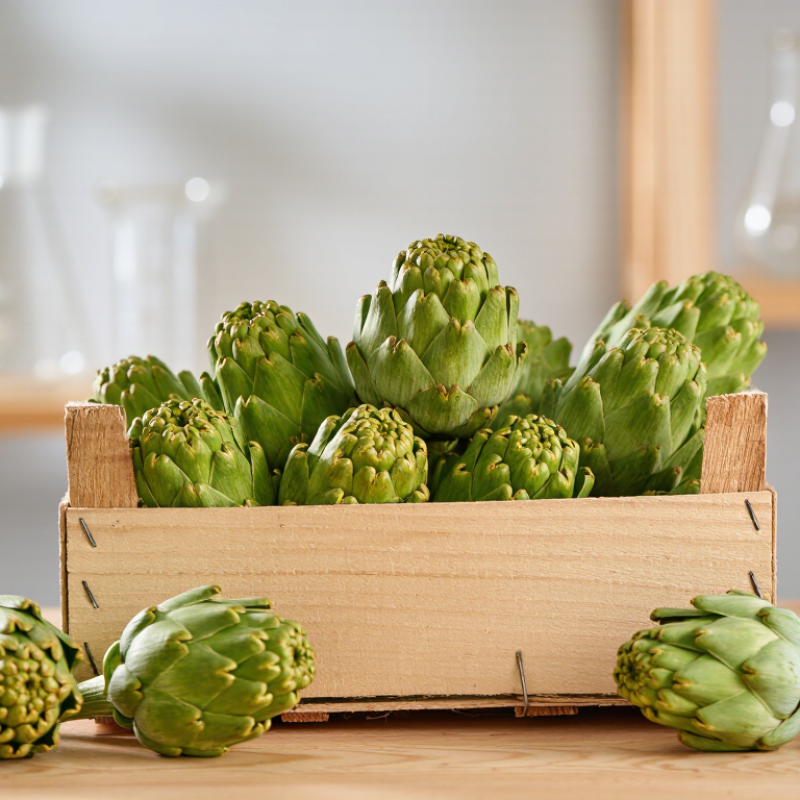
Organic artichoke extract is made from the leaves of the artichoke plant, Cynara cardunculus. It is not simply powdered edible artichoke hearts. Growers harvest suitable leaves, then clean and dry them to limit moisture and microbial growth. FAOSTAT recorded roughly 1.6 million tonnes of artichokes and cardoons harvested worldwide in 2022. That figure describes the crop, not certified organic extract production.
At a processing facility, dried leaves are milled and extracted, commonly with water or aqueous ethanol. The liquid is filtered, concentrated, and dried into a powder. The European Medicines Agency’s assessment describes artichoke leaf dry extracts with drug-to-extract ratios in ranges such as 4–6:1 or 4–7:1, depending on the extraction process. This ratio describes the starting herb compared with the resulting extract; it does not, by itself, prove potency.
Organic sourcing depends on documented farm practices and traceable handling. Manufacturers should also record the plant part, solvent, extract ratio, moisture, and contaminant testing. A certificate for the raw leaves alone may not establish the status of the finished extract. That distinction matters. Even a tidy specification can leave questions about batch variation, so buyers should check recent test records rather than rely on a single sample.
Artichoke leaf extract is valued for its mix of plant compounds, not one isolated ingredient. Commonly measured compounds include cynarin and chlorogenic acid, alongside luteolin derivatives. Their levels can vary with the plant part, harvest conditions, and extraction method. Details matter. A supplier’s specification should identify the extract ratio and, where relevant, the compounds used for standardization. A certificate of analysis can help buyers check identity, microbial quality, heavy metals, and pesticide residues. Organic claims should also be supported by current certification documents.
Product form shapes how an extract fits into a finished product. Fine powders are commonly used in capsules, tablets, and blended drink mixes; liquid extracts suit drops or other liquid formulations. Some buyers choose whole-leaf powder for a less concentrated profile, though it may taste distinctly bitter. Not every batch.
For food and supplement development, ask about carrier ingredients, solubility, moisture, and storage stability before selecting a format. Applications often include digestive wellness products, but evidence and permitted claims differ by market. Supplier documents help, yet they do not replace independent review. Even careful sourcing leaves one limitation: natural extracts can vary slightly between harvests.
China Best Organic Artichoke Extract Supplier?
Choosing an organic artichoke extract supplier takes more than checking a certificate. Confirm that the certificate covers the actual plant part, processing site, and product—not just a related ingredient. Ask for traceability records linking incoming artichoke leaves to the finished batch. Details matter. Organic requirements can vary by destination market, so verify the certificate’s scope and validity with its issuing body.
Quality testing should confirm identity and composition. A chromatographic method, such as HPLC, can help assess characteristic compounds, but results depend on the extract specification. Request a batch-specific certificate of analysis, then check its methods and acceptance limits. Testing may also cover pesticide residues, heavy metals, microbiological quality, and residual solvents where relevant to the process. One test cannot prove everything. A neat document is useful, but it is not a substitute for reviewing the underlying data.
Choosing an organic artichoke extract supplier in China starts with documents, not a polished product page. Ask for records. Request a current organic certificate and check that its scope covers the product, processing site, and relevant handling steps. Confirm the certifier, validity dates, and lot-level traceability. The paperwork should match the supplier’s specific organic claims. Ask for the botanical name, plant part, extraction solvent, extract ratio, and any carriers or processing aids. Details matter. If these fields are missing, request clarification before comparing prices.
Review quality controls with equal care. Request recent batch certificates of analysis and check which tests were performed, by whom, and using what methods. Depending on the product and intended market, ask about pesticide residues, heavy metals, microbial limits, and residual solvents. Compare sample results with written specifications, not just sales descriptions. A neat PDF can still leave questions. Ask how the supplier handles out-of-specification batches, retains samples, and traces raw artichoke material to its source. If possible, arrange a site assessment or a live walkthrough of receiving, storage, and production areas. One weakness in this process is that a sample may not represent every future batch, so agree on ongoing testing and change-notification procedures before placing a large order.
A dependable artichoke extract supplier should provide more than a competitive quote. Ask for the botanical name, plant part, extraction ratio, and extract solvent. Confirm whether the material is a powder or liquid, and request a recent sample from the lot being offered. Small details matter. A pale green powder may look consistent, yet appearance alone cannot verify identity or strength.
Review the documentation before approving a purchase. Request a lot-specific certificate of analysis with test methods and results for identity, active markers, microbiological quality, and relevant contaminants. Check that organic certification applies to the actual product and production site, not just a related ingredient. Traceability records should connect the raw material, processing date, and finished lot. A polished PDF is only a starting point; verify that names, dates, and lot numbers match across records. Gaps happen, and they deserve clear answers.
Import planning depends on the destination market and the product’s intended use. Confirm current requirements with the relevant authorities or a qualified customs professional before shipment. Align the commercial invoice, packing list, certificate of origin, product specification, and shipping documents. Also clarify packaging, storage conditions, shelf life, and responsibility for delays or rejected goods. Requesting a small pre-shipment sample can help catch differences early. It may not catch everything.
| Evaluation Area | What to Confirm with the Supplier | Useful Evidence or Documents | Import Consideration |
|---|---|---|---|
| Organic certification | Confirm the certification covers the relevant facility, product, and handling activities, and is valid for the intended destination market. | Current organic certificate, product scope or annex, and applicable transaction or shipment documentation. | Organic recognition and import procedures vary by market. A certificate issued under one system may not by itself establish eligibility in another. |
| Botanical identity and plant part | Specify the botanical name, plant part used (such as leaf), extraction method, carrier or excipients, and product form. | Product specification, manufacturing flow chart, and identity test information. | Clear identity and composition details help importers assess classification, permitted use, and labeling requirements. |
| Extract standardization | Agree on the extract ratio, solvent system, marker compounds if applicable, test method, and acceptance limits before ordering. | Signed specification and a batch-specific certificate of analysis (COA) showing results and methods. | Marker compounds and standardization claims are product-specific; do not assume that all artichoke extracts have the same composition. |
| Contaminant and microbiological testing | Define risk-based testing appropriate to the material and destination, including relevant microbes, heavy metals, pesticide residues, and residual solvents where applicable. | Recent batch COA and, where needed, reports from a qualified independent laboratory. | Applicable limits and required tests depend on the destination, product category, and intended use. Organic status does not mean residue-free. |
| Food safety and traceability | Review the facility’s food-safety controls, lot coding, raw-material traceability, change control, and complaint or recall procedures. | Facility audit information, food-safety plan or certification details, traceability records, and recall procedure. | The importer remains responsible for checking the rules that apply in the destination market; supplier documents do not replace importer obligations. |
| Commercial and shipping documents | Align product name, lot numbers, quantities, weights, country of origin, and shipping terms across documents. | Commercial invoice, packing list, transport document, and origin documentation when required. | Document requirements depend on the importing country, carrier, customs entry, and any preferential trade claim. |
| Customs classification and labeling | Provide a complete product description, composition, processing details, and intended use to support classification and label review. | Specification, ingredient statement, proposed label, and customs broker’s classification assessment. | Tariff classification is product- and jurisdiction-specific. Confirm the applicable code and labeling rules with a qualified customs professional. |
| Destination-market entry checks | Confirm who is responsible for prior notifications, importer verification, organic import records, and other pre-arrival steps. | Written responsibility matrix, shipment documentation checklist, and records required by the destination authority. | For example, U.S. food imports can involve FDA prior notice and importer obligations under applicable rules; EU organic imports may require an electronic certificate of inspection through TRACES. |
Note: Requirements depend on the product’s composition, intended use, and destination market. Verify current regulatory and customs requirements before placing an order or shipping goods.
It is made from artichoke leaves, not just powdered edible hearts. The leaves are cleaned, dried, milled, and extracted.
Processors commonly use water or aqueous ethanol. They filter and concentrate the liquid, then dry it into powder. Small process changes may affect the result.
It compares the amount of starting herb with the resulting extract. It does not prove potency by itself. Ask for supporting test results.
Request a current certificate covering the product, processing site, and handling steps. Check the certifier, validity dates, and lot traceability. Details matter.
Ask for the botanical name, plant part, solvent, extract ratio, carriers, and processing aids. Missing fields deserve clarification before price comparisons.
Check recent batch test reports for relevant pesticide residues, heavy metals, microbes, and residual solvents. Compare results with written specifications, not sales claims.
Ask about retained samples, out-of-specification procedures, and raw-material traceability. Agree on ongoing testing and change notifications. One sample is not a guarantee.
A visit or live walkthrough can show receiving, storage, and production areas. It helps, though it cannot answer every question. Reflect on what remains unverified.
Organic Artichoke Extract is made from carefully selected artichoke leaves or other suitable plant material through processes such as extraction, filtration, and drying. Its key natural compounds, including chlorogenic acids and cynarin, make it useful in dietary supplements, functional foods, and related product applications. Suppliers may offer the extract as a powder or liquid, with specifications tailored to different manufacturing needs.
When evaluating a supplier in China, buyers should review the source and handling of the organic raw materials, production controls, and quality-testing procedures. Ask for clear specifications and current test results covering identity, active-compound levels, purity, and relevant contaminants. Confirm that organic claims are supported by appropriate documentation for the intended market, and agree on sample evaluation, packaging, shelf life, and shipment conditions. Careful checks of certificates, traceability records, and import documents can help ensure a consistent product and a smoother sourcing process.

Le-Nutra Ingredients