The quest for sustainable and effective sources of health-boosting compounds has led researchers to explore Vine Tea Extract Dihydromyricetin. This compound is known for its myriad health benefits, particularly in combating alcohol-related conditions. Dr. Robert Smith, a leading expert in plant-based compounds, notes, "Harnessing the power of natural extracts can revolutionize our health industry."
Vine Tea, or Ampelopsis grossedentata, is rich in Dihydromyricetin, which has gained attention in recent years. Extracting this compound involves careful methods to maintain its efficacy. While the process seems straightforward, it often presents challenges. Variability in plant source quality can affect yields. Additionally, ensuring that the extraction method preserves the compound's properties requires further exploration.
As the demand for natural remedies grows, extracting Vine Tea Extract Dihydromyricetin can become a pivotal focus. Yet, the industry must address concerns about sourcing and quality control. Innovating extraction techniques will be crucial to meet consumer needs and achieve sustainable growth. The journey to harnessing Vine Tea Extract Dihydromyricetin holds great promise but demands a commitment to excellence and reliability.
Understanding Dihydromyricetin and Its Sources
Dihydromyricetin (DHM) is a powerful flavonoid found predominantly in vine tea, known for its myriad health benefits. Understanding its sources enhances our appreciation of this compound. Vine tea, or Ampelopsis grossedentata, is rich in DHM and other flavonoids that contribute to its antioxidant properties. This plant thrives in the mountainous regions of China, where its leaves are commonly used to create tea and extracts.
When sourcing dihydromyricetin from vine tea, quality is paramount. Freshly harvested leaves yield higher concentrations of DHM. Proper extraction methods, such as alcohol and water extraction, help preserve its potency. However, not all extraction processes are effective. Some may result in a loss of beneficial compounds, which diminishes the overall quality of the extract. It's crucial to select processes that retain the integrity of the plant's active ingredients.
Researchers often investigate various extraction techniques to improve yield. Yet, inconsistencies can arise between different batches of vine tea. Growing conditions, climate, and soil type can affect DHM content significantly. Therefore, relying on standardized sourcing methods can be complex. Continuous studies in this area can provide better insights and address these fluctuations in quality and concentration.
Overview of Vine Tea and Its Benefits
Vine tea, derived from the Ampelopsis grossedentata plant, offers numerous health benefits. This traditional herbal tea is rich in dihydromyricetin, a powerful flavonoid known for its antioxidant properties. Consuming vine tea can enhance liver function and alleviate hangover symptoms. Its potential anti-inflammatory effects may reduce chronic disease risks.
Beyond its bioactive compounds, vine tea presents a pleasing taste. The flavor profile is mildly earthy and slightly sweet, making it enjoyable for a wide audience. Some might find the taste unfamiliar initially, prompting a period of adjustment. While the benefits are impressive, individual experiences can vary.
Researchers continue to explore the full potential of vine tea. As interest grows, more studies are needed to validate its health claims. This exploration requires critical evaluation and reflection on existing literature. Vine tea can be a beneficial addition to a health-conscious lifestyle if approached with care and mindfulness.
Steps to Extract Dihydromyricetin from Vine Tea
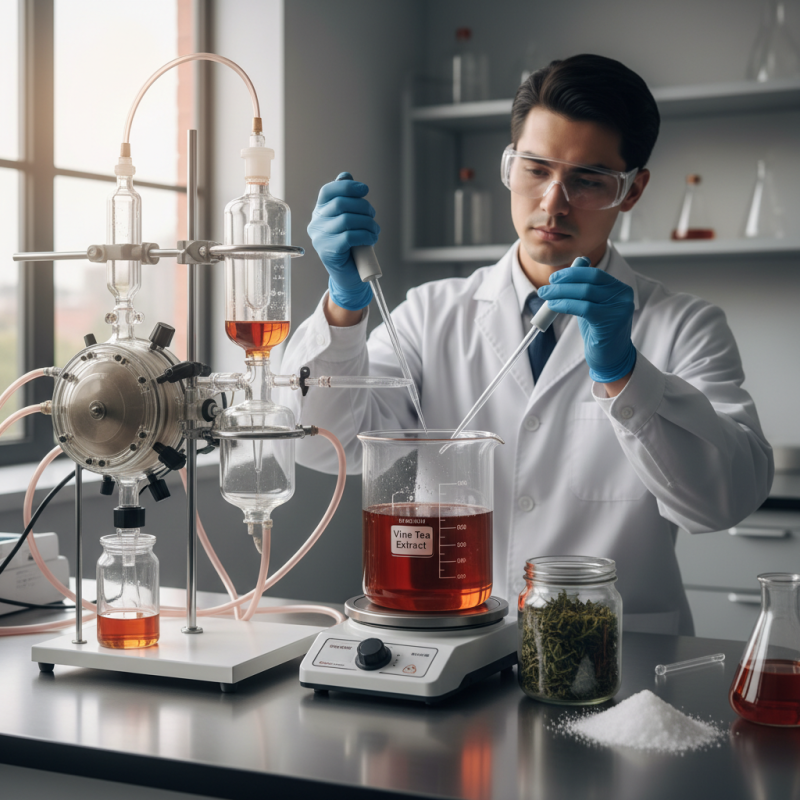
Extracting dihydromyricetin from vine tea can be a straightforward process. Vine tea, rich in antioxidants, provides a natural source. First, gather fresh vine tea leaves. Clean the leaves thoroughly with water to remove impurities. Then, chop them into small pieces. This increases the surface area and aids in extraction.
Next, you’ll need an extraction solvent. Generally, ethanol works well due to its effectiveness in dissolving dihydromyricetin. Combine the chopped leaves with the ethanol in a glass container. Maintain a ratio of about 1:5, leaves to solvent. Stir the mixture gently and seal the container. Allow it to sit at room temperature for about 48 hours. This period is crucial for optimal extraction.
**Tips:** Maintain a consistent temperature for better results. Higher temperatures can degrade sensitive compounds. Always observe safety guidelines when handling solvents. Filter the mixture using a fine mesh or cheesecloth after the extraction. This separates the liquid extract from the solid plant material. The remaining solution can be concentrated using a rotary evaporator if available. Always document each step, noting any variations or challenges faced during the process. This reflection can enhance future extractions.
How to Source Dihydromyricetin from Vine Tea Extract? - Steps to Extract Dihydromyricetin from Vine Tea
| Step |
Description |
Materials Required |
Estimated Time |
| 1 |
Harvest fresh vine tea leaves. |
Fresh vine tea leaves |
1-2 hours |
| 2 |
Dry the leaves in a shaded area. |
Drying racks or trays |
2-3 days |
| 3 |
Grind the dried leaves into a fine powder. |
Mill or grinder |
1 hour |
| 4 |
Hot water extraction of the powdered leaves. |
Water, heat source |
1-2 hours |
| 5 |
Filtration of the extract to remove solids. |
Filter paper or cloth |
30 minutes |
| 6 |
Concentration of the filtrate using evaporation. |
Heat source or rotary evaporator |
1-3 hours |
| 7 |
Purification of the concentrated extract. |
Chromatography setup |
2-4 hours |
Analyzing the Quality of Dihydromyricetin Extracts
Dihydromyricetin, a flavonoid from vine tea, possesses numerous potential health benefits. The quality of dihydromyricetin extracts largely depends on the source and processing methods. Analyzing these factors is vital for determining extract effectiveness.
To assess extract quality, several steps can be taken. First, consider the sourcing of vine tea leaves. Optimal harvesting time can influence the flavonoid concentration. Leaves that are young and freshly harvested typically yield better extracts. Furthermore, the extraction method plays a crucial role. Traditional methods may vary in efficacy compared to modern techniques like supercritical CO2 extraction.
It’s essential to evaluate the purity of the extracts. Impurities can compromise health benefits. Conducting tests for heavy metals and microbial contaminants ensures reliability. However, challenges remain. Not all extraction methods provide consistent results across different batches. Continuous research is needed to refine these processes. Being observant of these nuances can lead to higher-quality dihydromyricetin extracts.
Applications and Uses of Dihydromyricetin in Health Products
Dihydromyricetin (DHM), a flavonoid derived from vine tea extract, shows promise in health applications. Research indicates that DHM may support liver health by aiding detoxification. A study published in the Journal of Ethnopharmacology reported that DHM effectively reduces alcohol-induced liver injury in animal models. This suggests potential for inclusion in health supplements targeting liver function.
Additionally, DHM may possess antioxidant properties. According to a report from the American Chemical Society, flavonoids like DHM can scavenge free radicals, reducing oxidative stress. This makes them valuable in formulations aiming to combat aging and enhance overall wellness. Interestingly, some experts argue that while DHM is beneficial, more human studies are necessary to fully understand its effectiveness and dosage.
Moreover, DHM's role in inflammation reduction gains attention. It may help manage conditions like arthritis and metabolic syndrome. However, it's crucial to note the lack of standardization in extraction processes from vine tea, which may lead to inconsistencies in DHM content across products. Understanding this variability is vital for manufacturers. The industry must prioritize reliable sourcing methods and clinical validation for health claims associated with dihydromyricetin.
Conclusion
Dihydromyricetin, a bioactive compound known for its health benefits, can be effectively sourced from Vine Tea, a plant recognized for its rich flavonoid content. The extraction process involves several key steps, including the selection of high-quality Vine Tea leaves, optimal extraction methodology, and purification techniques to isolate Dihydromyricetin. This Vine Tea Extract Dihydromyricetin is celebrated for its potential applications in health products, where it can support overall wellness and enhance metabolic function.
Understanding the quality of the extracted Dihydromyricetin is crucial for ensuring its efficacy in various applications. By analyzing the concentration and purity of the extracts, producers can confirm the beneficial properties inherent in Vine Tea, making it a valuable ingredient in health and wellness formulations.

 Le-Nutra Ingredients