Choosing Artichoke Extract Powder requires more than comparing prices or reading attractive labels. The powder may look uniformly green, yet its quality depends on the plant part, extraction method, origin, and storage conditions. A sharp herbal aroma can suggest freshness, but it cannot prove purity. That detail matters.
Pharmacognosy expert Professor Michael Heinrich offers a useful reminder: “Evidence matters as much as tradition.” This principle should guide every purchase. The following ten tips examine standardized cynarin content, botanical identification, solvent use, third-party testing, and contaminant screening. They also consider moisture protection, packaging, supplier transparency, and realistic dosage information. A reliable supplier should provide a current certificate of analysis, not vague promises. Check the batch number. Inspect the testing date. Ask questions when details are missing.
Artichoke Extract Powder is often discussed for digestive and antioxidant support, but marketing language can move faster than strong human evidence. That deserves caution. Individual responses may differ, especially among people with gallbladder conditions, allergies to Asteraceae plants, or prescribed medicines. A qualified healthcare professional can help assess personal risks. This guide does not pretend that every powder performs equally. Some labels remain incomplete. Some conclusions still need better research. Careful selection is therefore practical, not excessive. The best choice is usually the product with clear documentation, sensible claims, and consistent manufacturing standards.
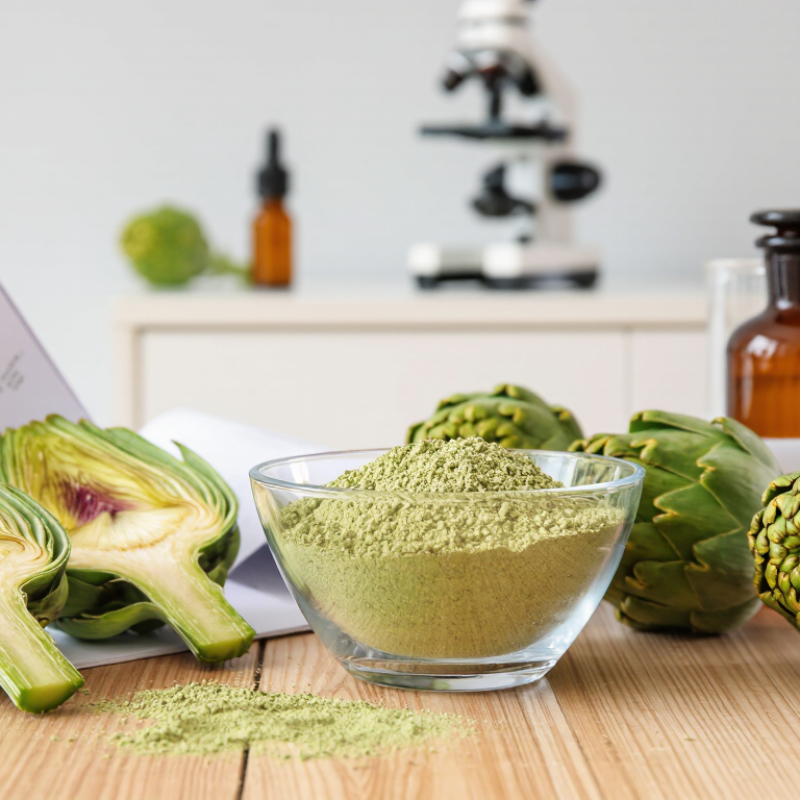
Choosing artichoke extract powder starts with a clear target. The plant part matters. Leaf extract is usually the practical choice for products focused on naturally occurring phenolic compounds. Ask for the botanical name, plant part, extraction method, and carrier details.
Tip 1: Confirm it is leaf extract.
Tip 2: Check the Latin name.
Tip 3: Review the extraction solvent.
Tip 4: Identify added fillers.
Small details matter.
Cynarin levels need careful interpretation. A higher percentage is not automatically better. The test method, batch variation, and moisture level can change the reported number.
Tip 5: Request a recent certificate of analysis.
Tip 6: Check the cynarin testing method.
Tip 7: Compare results on a dry-weight basis.
Tip 8: Ask about batch consistency.
Some labels sound precise but explain little.
The remaining scope covers practical quality checks. Tip 9: Examine color, odor, and powder flow in a retained sample. A grassy aroma can be normal, but unusual bitterness may deserve review. Tip 10: Verify microbial, heavy-metal, pesticide, and allergen testing. I once focused too heavily on the headline assay and overlooked storage conditions. That was a useful mistake. Protect the powder from heat, light, and humidity, then confirm packaging supports that protection. Check documentation twice.
When choosing artichoke extract powder, verify the cynarin assay before comparing prices. A certificate may show 2.5%, 5%, or 10% cynarin. That number describes concentration, not guaranteed performance. The European Medicines Agency’s 2018 assessment report identifies caffeoylquinic acids as important artichoke constituents. However, it does not establish a universal 10% cynarin requirement. Treat high percentages carefully.
Ask for the testing method. HPLC results are more informative than vague “standardized extract” language. Confirm whether the assay uses dry-weight correction, a reference standard, and a defined detection limit. Also check the plant part, extraction ratio, and batch number. A 10% result from one method may not equal 10% from another. Small details matter. The USP Dietary Supplements Compendium emphasizes identity, purity, and contaminant controls for botanical materials, supporting a broader quality review beyond one marker.
Review at least three recent batch reports. Look for consistent results near the claimed range, not one impressive sample. For example, 2.5% cynarin may suit a lower-strength formula, while 10% requires stronger documentation and tighter process control. I would also request heavy-metal, microbial, pesticide, and residual-solvent results from an ISO/IEC 17025-accredited laboratory. Cynarin alone is imperfect. The overlooked question is whether the extract’s full caffeoylquinic acid profile remains consistent after storage. Check the retest date, packaging, and moisture data before buying.
When choosing artichoke extract powder, check its identity before studying its price or color. The label should state the accepted botanical name, such as Cynara scolymus L. It should also identify the plant part used, usually the leaf rather than the edible flower bud. These details matter because different parts can contain different compound profiles. A vague term like “artichoke powder” leaves too many questions.
Examine the extraction ratio carefully. A 4:1 ratio generally means four parts raw plant produced one part extract, but the ratio alone proves little. Ask for a lot-specific certificate of analysis, testing methods, and the actual plant source. Compare the declared marker compounds with the stated plant part. I once assumed a familiar botanical name guaranteed a reliable material. That assumption was weak. Color and bitterness can offer clues, but they cannot confirm identity. Clear documentation carries more weight. Check whether the supplier explains solvents, carriers, and moisture limits. Small details matter. If the label lists only “extract” without a botanical name, plant part, or ratio, pause before purchasing. A qualified laboratory can also verify identity through microscopy, chromatography, or other validated methods. Examine the paperwork, not just the powder.
When choosing artichoke extract powder, screen the certificate of analysis before reviewing price or color. Moisture should be 5% or lower. This limit helps reduce caking, microbial growth, and active-compound degradation during storage. Request the test method, not just the result. Karl Fischer analysis can offer greater specificity than a simple loss-on-drying test, especially when volatile materials are present.
Demand a recent COA.
Heavy-metal compliance requires more than a statement saying “passed.” USP General Chapter <2232> identifies daily exposure limits for oral dietary supplements, including 15 micrograms of arsenic, 5 micrograms of cadmium, 5 micrograms of lead, and 15 micrograms of mercury per day. These values must be interpreted against the product’s serving size. ICP-MS testing, aligned with USP <233>, is a stronger verification route than unspecified “laboratory testing.” Ask whether the sample represents the complete production lot.
Look for traceable sampling details, laboratory accreditation, and test dates. The WHO monographs on medicinal plants also emphasize identity, contaminants, and storage control, although they do not replace local requirements. A powder may meet the moisture target yet still fail identity testing or contain uneven contamination. That is an easy mistake. I would also inspect packaging records, desiccant use, and warehouse humidity logs. A sealed pouch proves little if it was filled in a damp room. Quality screening is not perfect, but documented methods make its weaknesses visible.
When choosing artichoke extract powder, treat supplier documents as working evidence, not decoration. The WHO Global Report on Traditional and Complementary Medicine 2019 states that 170 of 194 member states reported using traditional medicine. This broad use increases the need for dependable botanical quality.
Request a lot-specific Certificate of Analysis (COA). It should identify the plant part, extraction ratio, marker compounds, moisture, microbiology, pesticides, and heavy metals. Confirm the testing laboratory, method, units, and acceptance limits. A reported “polyphenol content” is incomplete without its analytical method. It may also hide meaningful variation. Check whether the COA matches the shipped lot number, production date, and retest date.
Ask for current GMP certification, but verify its issuer, facility address, scope, and expiry. FDA dietary supplement CGMP rules under 21 CFR Part 111 require specifications, testing, records, and traceable production controls. WHO’s Guidelines on Good Manufacturing Practices for Herbal Medicines also emphasize documented identity, contamination control, and consistent processing. Request a batch-traceability example, from farm or raw-material lot through extraction, drying, packing, and release. The supplier should explain solvent use and storage conditions clearly. Ideally, an independent laboratory confirms critical results. Not every supplier will provide everything. That is a risk worth recording, not ignoring. A polished certificate can still leave unanswered questions.
The label should state Cynara scolymus L. and identify the plant part used. Leaf material is common. “Artichoke powder” is too vague.
Leaves and edible flower buds can contain different compound profiles. The plant part should match the declared marker compounds. Small details matter.
It generally means four parts raw plant produced one part extract. The ratio alone proves little. Request source and production records.
Ask for a recent, lot-specific certificate of analysis, testing methods, plant source, and sampling details. Do not inspect powder alone.
Moisture should be 5% or lower. This can reduce caking, microbial growth, and compound degradation. Request the actual test method.
Karl Fischer analysis can offer greater specificity than loss-on-drying. Volatile materials may affect simpler testing. Method details matter.
Check arsenic, cadmium, lead, and mercury against daily exposure limits and serving size. A “passed” statement is not enough.
ICP-MS testing with a validated method provides stronger verification than unspecified laboratory testing. Confirm the sample represents the complete lot.
No. They may offer clues, but they cannot replace microscopy, chromatography, or validated identity testing. I once trusted appearance too much.
Review packaging records, desiccant use, warehouse humidity logs, and filling conditions. A sealed pouch proves little. Damp rooms still matter.
Choosing the right Artichoke Extract Powder begins with defining your product goals and identifying the appropriate material, such as leaf extract, along with the desired cynarin concentration. A clear target helps buyers compare products consistently and avoid confusing different plant parts or extract specifications. Potency should be verified through reliable laboratory assays, especially when comparing cynarin levels ranging from 2.5% to 10%.
Quality verification is equally important. Confirm the botanical name, plant part, and extraction ratio shown in the documentation, then review moisture results, with a preferred level of no more than 5%, as well as compliance with heavy-metal limits. Supplier evaluation should include recent certificates of analysis, evidence of GMP-based production, and complete batch traceability. By combining identity checks, potency testing, safety screening, and transparent supplier records, buyers can select an Artichoke Extract Powder that is consistent, properly documented, and suitable for their intended application.

Le-Nutra Ingredients