China Top Pure Milk Thistle Extract Powder Manufacturer?

Time:2026-10-13 Author:Sophia
0%

China has become a significant sourcing hub for botanical extracts, including Pure Milk Thistle Extract Powder. Its manufacturing strength comes from organized herb cultivation, extraction facilities, and export experience. Still, a low price does not prove superior quality.

Recent industry analyses from Grand View Research and IMARC Group indicate steady growth in the global milk thistle extract market. Their reports connect demand with dietary supplements, functional foods, and growing interest in liver health. However, market estimates differ because researchers use different product definitions and regional data. That matters when comparing Chinese manufacturers.

The better question is not simply, “Who is the cheapest supplier?” It is, “Who can prove consistency?”

A qualified manufacturer should provide botanical identification, extraction specifications, batch records, contaminant testing, and certificates from independent laboratories. Buyers should examine the stated silymarin content, moisture level, microbial limits, heavy-metal results, and packaging controls. A clean powder should show uniform color, fine texture, and clear traceability from raw seed to finished batch.

Evidence remains limited.

Dr. Brent Bauer of Mayo Clinic states, “Studies of milk thistle for liver diseases have had mixed results.” This caution supports responsible product positioning. Pure Milk Thistle Extract Powder should not be presented as a guaranteed treatment or replacement for professional medical care.

China’s leading manufacturers may offer strong production capacity, but supplier evaluation still requires practical verification. Request recent certificates. Review audit records. Test samples independently. A thoughtful purchasing process may take longer, yet it reduces quality risks and supports reliable long-term partnerships.
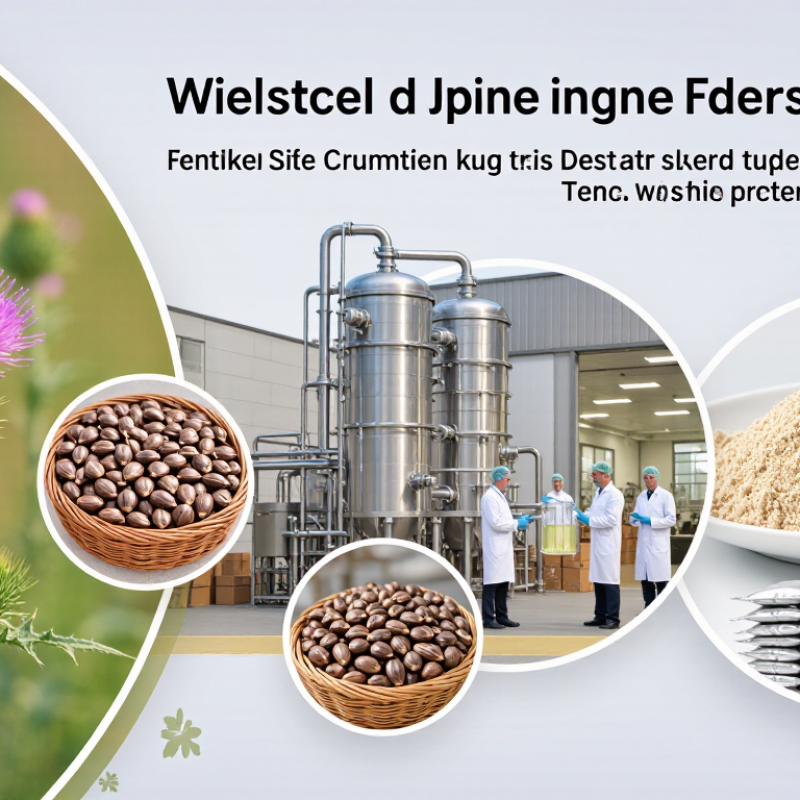
China Top Pure Milk Thistle Extract Powder Manufacturer?

What Is Pure Milk Thistle Extract Powder?

Pure milk thistle extract powder is a concentrated botanical ingredient made from the seeds of Silybum marianum. The plant is commonly known as milk thistle. Its key compounds are silymarin flavonolignans, including silybin, silydianin, and silychristin. After extraction, the liquid is filtered, dried, and milled into a fine powder. Its color may range from pale beige to yellow-brown. The texture should feel dry and flow evenly.

“Pure” does not always mean the same thing. It may describe a single-plant extract, but it does not automatically prove high potency or complete cleanliness. A professional specification should state the extract ratio, silymarin percentage, botanical identity, moisture, and carrier ingredients. Testing should also cover microbes, heavy metals, pesticides, and residual solvents. A certificate of analysis adds useful evidence, although documents still need careful review. This is where many buyers become too confident.

Tips: Check the Latin plant name and plant part. Ask whether the powder is standardized for silymarin. Review recent laboratory results, not only marketing descriptions. A clean-looking powder can still vary between batches. Storage matters too; heat, humidity, and direct light may reduce stability. Keep the container sealed in a cool, dry place. The term “pure” sounds reassuring, but it remains incomplete without measurable quality data.

How Is Milk Thistle Extract Powder Produced in China?

China’s milk thistle extract powder usually begins with cleaned Silybum marianum seeds. Suppliers remove stones, dust, and immature material before controlled milling. Traceability records should cover the farm, harvest date, and storage conditions. Seeds are commonly extracted with food-grade ethanol and purified water. The liquid extract is filtered, concentrated under reduced pressure, and spray-dried into a free-flowing powder. Heat control matters. Excessive heat may damage sensitive compounds.

Standardization is the technical core. The European Medicines Agency assessment report on Silybum marianum states that standardized extracts commonly contain about 70–80% total silymarin. Qualified Chinese facilities therefore test identity, silymarin content, moisture, solvent residues, heavy metals, pesticides, and microbial counts. High-performance liquid chromatography can measure key flavonolignans, including silybin and silydianin. A certificate of analysis should show methods, results, and acceptance limits. A clean-looking powder proves little.

Manufacturers often operate under GMP-based systems, with HACCP and ISO 22000 controls supporting process safety. The WHO Guidelines on Good Agricultural and Collection Practices emphasize authenticated plants, controlled drying, and contamination prevention. Those details affect extraction yield. They also affect consistency. Some producers overemphasize a high assay while overlooking solubility, color stability, or batch variation. That deserves scrutiny. Buyers should request representative batch data, not one attractive laboratory report. Production is efficient, but not automatically uniform.

What Quality Standards Define a Top Manufacturer?

A top milk thistle extract powder manufacturer begins with verified raw material identity. The supplier should document botanical name, plant part, harvest region, and traceability records. Macroscopic and microscopic checks help prevent substitution. DNA testing may add evidence, but it cannot prove active-compound strength.

That distinction matters.

The finished powder should state a measurable silymarin specification, not only “high potency.” HPLC testing should quantify silybin, silydianin, and silychristin, with chromatograms retained for review.

The USP Dietary Supplements Compendium emphasizes identity, strength, purity, and contaminant control. FDA dietary supplement cGMP requirements under 21 CFR Part 111 also require written specifications and laboratory verification.

A serious facility should follow HACCP and ISO 22000 principles, while testing heavy metals, pesticides, microbes, residual solvents, and aflatoxins. COAs need batch numbers, methods, limits, and actual results.

Look beyond glossy certificates. Check whether laboratories use validated methods and suitable reference standards. The 2023 WHO Global Traditional Medicine report stresses reliable quality systems and evidence-based control across supply chains.

Yet testing is not perfect. Sampling can miss uneven contamination. Silymarin values may shift with extraction solvent, drying temperature, and storage humidity. Ask for stability data, not promises.

A retained sample, sealed in a cool, dry room, offers practical accountability. A manufacturer that welcomes independent audits usually understands this uncertainty.

How to Evaluate a Chinese Milk Thistle Extract Supplier?

China Top Pure Milk Thistle Extract Powder Manufacturer?

How to Evaluate a Chinese Milk Thistle Extract Supplier?

A dependable supplier should identify the plant clearly: Silybum marianum, seed extract, and extraction method. Ask for the standardization level, especially the silymarin percentage. Each batch should include a current certificate of analysis, not a reused document. Check HPLC testing for active compounds, plus tests for heavy metals, pesticides, microbes, and residual solvents. The powder should also match its color, odor, and solubility specifications.

A reliable factory can explain its traceability system, from seed sourcing to final packing. Request the batch number, production date, shelf life, and storage conditions. GMP or ISO certificates are useful, but verify their validity and issuing body. A sample should be tested before a large order. A polished website proves little. I would not treat the lowest price as a win, because weak testing can create expensive quality problems later. Even experienced buyers can miss small inconsistencies.

Tips: Compare two or three recent batches. Confirm laboratory names and test methods. Ask for a video audit when possible. Keep written specifications. No checklist is perfect. Consistent answers matter.

Where Is Pure Milk Thistle Extract Powder Used?

China Top Pure Milk Thistle Extract Powder Manufacturer?

Pure milk thistle extract powder is mainly used in dietary supplements. Its key compound, silymarin, is commonly standardized for consistent product quality. Capsules, tablets, powders, and liquid formulas are typical formats. Grand View Research valued the global dietary supplements market at about USD 177.5 billion in 2023. Herbal extracts remain an important part of this expanding category.

Food and beverage developers also use milk thistle extract in wellness powders, herbal teas, and functional blends. However, its bitter taste can affect consumer acceptance. Microencapsulation or careful flavor balancing may improve the experience. Cosmetic formulators explore silymarin in creams, serums, and scalp-care products. Research focuses on antioxidant properties, but laboratory findings should not become exaggerated marketing claims.

Quality control matters. Manufacturers normally test identity, silymarin content, moisture, heavy metals, pesticides, and microbial limits. The European Medicines Agency has described milk thistle preparations within traditional herbal medicine assessments, while noting that clinical evidence is not always conclusive. That limitation deserves attention. A responsible supplier should provide traceable sourcing, validated testing, and batch-specific certificates. Extract powder is useful, but it is not automatically effective for every application.

China Top Pure Milk Thistle Extract Powder Manufacturer? - Where Is Pure Milk Thistle Extract Powder Used?

Application Area Common Product Format Primary Functional Role Typical Technical Parameters Processing Considerations Market Use Status
Nutraceuticals and Dietary Supplements Capsules, tablets, sachets, and bulk powder Source of silymarin, a group of flavonolignans naturally present in milk thistle fruit extract Botanical source: Silybum marianum; standardized extracts commonly specify approximately 70–80% silymarin, depending on the extraction method and test method Moisture, particle size, microbial limits, heavy metals, residual solvents, and marker-compound testing should be controlled Established use
Functional Foods and Drink Mixes Instant powders, granules, nutrition blends, and powdered beverage premixes Addition of a botanical extract to wellness-oriented formulations Water-dispersible or spray-dried versions may be selected when improved mixing performance is required; standard extract powder is not necessarily fully water-soluble Evaluate taste, color, dispersibility, hygroscopicity, compatibility with acids and minerals, and stability during storage Formulation-dependent
Herbal and Botanical Blends Multi-ingredient capsules, tablets, and powdered formulas Combination with other botanical ingredients in general wellness products Identity is commonly confirmed through botanical authentication and chromatographic profiling of silymarin components Check ingredient interactions, extract ratios, marker-compound overlap, odor, color, and batch-to-batch consistency Established use
Cosmetic and Personal-Care Formulations Serums, creams, lotions, masks, and powder-based products Plant-derived antioxidant ingredient for cosmetic formulation development Cosmetic-grade material should meet applicable purity, microbial, heavy-metal, and contaminant specifications Assess solubility in the chosen base, color contribution, odor, light sensitivity, preservative compatibility, and skin-safety requirements Specialized use
Animal Nutrition Premixes, feed additives, and powdered nutritional blends Botanical ingredient used in selected animal-nutrition formulations Specifications should include botanical identity, active-marker content, microbiological quality, contaminants, and feed-use compliance Use only where permitted by the destination market; review species, inclusion level, palatability, and feed-stability requirements Regulation-dependent
Research and Analytical Applications Reference material, assay development, and botanical research samples Study of silymarin composition, extraction performance, stability, and formulation behavior Analytical work may examine silybin, silydianin, silychristin, and other silymarin-related constituents using validated chromatographic methods Require a certificate of analysis, traceable testing methods, storage conditions, and a defined lot number Technical use
Private-Label Powder Products Bulk powder packed into consumer-ready containers or sachets Base ingredient for customized supplement products without displaying supplier or manufacturer information in the formulation table Common purchasing specifications include extract ratio, silymarin assay, mesh size, moisture, packaging format, shelf life, and allergen status Confirm documentation, labeling requirements, packaging-barrier performance, traceability, and country-specific regulatory compliance Commercial use

Quality note: “Pure” does not by itself define a single technical specification. Buyers should verify the botanical identity, plant part used, extraction ratio, silymarin assay, solvent-residue limits, microbiological results, heavy-metal testing, pesticide testing, moisture, and certificate of analysis for each production lot. Product use and permitted claims vary by country and product category.

FAQS

How is milk thistle extract powder produced?

Cleaned milk thistle seeds are milled under controlled conditions. Food-grade ethanol and purified water extract the target compounds. The liquid is filtered, concentrated, and spray-dried. Too much heat can damage sensitive components.

What does standardized milk thistle extract mean?

Standardization means setting a measurable total silymarin range. Common extracts contain about 70–80% total silymarin. Testing may measure silybin, silydianin, and silychristin separately. “High potency” alone proves very little.

Which quality tests should buyers request?

Request tests for identity, silymarin content, moisture, and microbial limits. Heavy metals, pesticides, aflatoxins, and solvent residues also deserve attention. A certificate should show batch numbers, methods, limits, and actual results. One attractive report is not enough.

How can raw material traceability be checked?

Records should identify the botanical name, plant part, farm, and harvest date. Storage conditions should also be documented. Suppliers should remove stones, dust, and immature seeds. Traceability can fail quietly.

Why does extraction temperature matter?

Excessive heat may reduce sensitive compound quality. Drying temperature can affect color, solubility, and final assay results. Controlled processing supports better batch consistency. Consistency is never automatic.

Where is milk thistle extract powder commonly used?

It is used in dietary supplements, including capsules, tablets, powders, and liquid formulas. Food developers may add it to herbal teas and wellness blends. Cosmetic products may include it in creams, serums, or scalp-care formulas. Applications differ.

What problems can affect the finished powder?

The powder may have a bitter taste. Moisture can reduce flowability and storage stability. Batch values may shift with solvents, heat, and humidity. A clean appearance cannot reveal every problem.

What should a responsible supplier provide?

A responsible supplier provides representative batch data and validated laboratory results. Stability information should support the proposed storage conditions. Retained samples can help investigate later concerns. Independent audits add useful evidence. No system is perfect.

Conclusion

Pure Milk Thistle Extract Powder is a botanical ingredient made by concentrating selected milk thistle seeds into a fine, stable powder. In China, production typically involves raw material identification, cleaning, controlled extraction, filtration, concentration, drying, milling, and packaging. A top manufacturer should maintain consistent processes, traceable sourcing, hygienic facilities, and reliable testing for identity, purity, active compound content, moisture, heavy metals, microorganisms, and contaminants.

When evaluating a Chinese supplier, buyers should review certificates, quality-management procedures, laboratory capabilities, production capacity, documentation, and sample consistency. Clear communication, transparent specifications, stable lead times, and customized packaging can also indicate dependable service. Pure Milk Thistle Extract Powder is commonly used as an ingredient in dietary supplements, functional foods, beverages, cosmetics, and research-oriented formulations. Its suitability depends on the required specification, intended application, local regulations, and the supplier’s ability to provide consistent quality and complete technical documentation.

Sophia

Sophia

Sophia is a dedicated marketing professional with an exceptional depth of knowledge about her company's products and services. With a keen understanding of market trends and customer needs, she crafts insightful blog posts that not only inform but also engage readers, enriching the company’s online......