Why Choose Pure Artichoke Extract for Global Sourcing?
Pure Artichoke Extract is gaining attention among global buyers seeking recognizable, plant-based ingredients with dependable quality. Derived from carefully selected artichoke leaves, it can support product development in supplements, functional foods, and wellness formulations. However, sourcing decisions should rely on evidence, not attractive labels or broad promises.
Experienced buyers usually examine the entire supply chain. They review botanical identity, extraction methods, active-compound specifications, and batch consistency. A reliable supplier should provide clear documentation, including certificates of analysis, contaminant testing, and traceability records. Manufacturing conditions matter too. Controlled drying and extraction can influence color, aroma, solubility, and final performance. Small details matter.
Pure Artichoke Extract should also match the buyer’s intended application. Powder for capsules may require different particle size and moisture limits than an ingredient used in beverages. Packaging should protect the extract from humidity, heat, and light during long-distance transport. Regional labeling and import requirements must be checked before shipment. Standards vary.
No extract is perfect. Natural materials can show variation between harvests, and supplier data may not answer every technical question. That is why responsible sourcing includes sample evaluation, independent verification, and practical communication. Buyers should ask difficult questions about origin, testing frequency, storage, and corrective actions. A transparent partner will welcome this process, even when improvements remain necessary. Careful review creates stronger purchasing decisions and supports consistent quality across international markets.
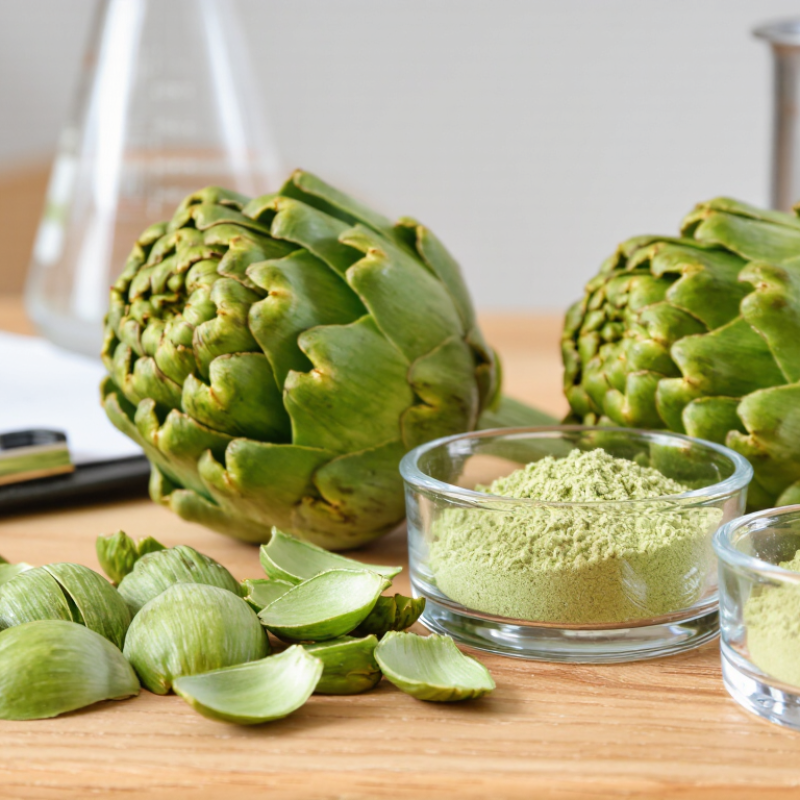
Pure artichoke extract is a concentrated botanical material made from the leaves of Cynara scolymus. It is not simply dried artichoke powder. Water, ethanol, or another permitted solvent may draw selected compounds from the plant. Manufacturers then remove the solvent and test the resulting extract for identity, strength, and contaminants. The leaf is commonly chosen because it contains cynarin and related phenolic compounds. However, composition changes with harvest season, soil, drying, and extraction conditions.
For global sourcing, buyers should request the botanical name, plant part, extraction ratio, and solvent details. A credible specification also states marker compounds, moisture, heavy metals, microbes, pesticides, and residual solvents. Independent laboratory testing adds useful evidence. Certificates alone are not enough. Lot samples, traceability records, and stable packaging help verify what arrives at the warehouse. Light, heat, and humidity can slowly reduce quality.
The word pure deserves careful attention. In many markets, it is not a universal legal definition. It may mean a single botanical ingredient, but it does not automatically mean stronger or safer. A highly concentrated extract can be unsuitable for some formulations or sensitive users. That point is easy to overlook during price comparisons. In my view, sourcing decisions should balance clean composition, reproducible testing, and realistic supply continuity. Even experienced teams can miss a weak batch when documentation looks polished. That is why small pilot orders and repeat testing remain practical safeguards.
It is a concentrated botanical extract made from artichoke leaves. The botanical name is Cynara scolymus. It is not simply dried leaf powder. Water, ethanol, or another permitted solvent may be used.
Artichoke leaves contain cynarin and related phenolic compounds. These compounds help identify and evaluate the extract. Their levels can change with soil, harvest season, drying, and extraction conditions.
Request the botanical name and plant part. Ask for the extraction ratio and solvent details. The specification should list marker compounds, moisture, microbes, heavy metals, pesticides, and residual solvents. Small details matter.
No. The meaning of “pure” differs between markets. It may describe a single botanical ingredient. It does not automatically prove greater strength or safety. The wording needs careful review.
Request a current certificate of analysis for each batch. Check the lot number against farm, processing, and laboratory records. Use independent laboratory testing when practical. Certificates alone are not enough. A polished document can still hide a weak batch.
Protect the extract from light, heat, and humidity. Use sealed packaging suited to transport and warehouse conditions. Humidity entering ordinary packaging may reduce quality. A pale powder proves very little.
Check allergen statements, contaminant controls, and stability data. Review expected transport temperatures and storage conditions. A concentrated extract may not suit every formulation or sensitive user. This point is easy to overlook.
Yes. The same extract may be treated as a food ingredient, supplement component, or cosmetic raw material. This classification affects claims, labels, registrations, and evidence. Compare the specification with current destination-country rules. Old templates can mislead.
Pure Artichoke Extract is a concentrated botanical ingredient derived from the leaves of the artichoke plant and valued for its naturally occurring polyphenols, especially cynarin and chlorogenic acids. These compounds contribute antioxidant properties and support its use in food, beverage, dietary supplement, and wellness formulations. Depending on the extraction method and concentration, artichoke extract may also provide functional benefits related to digestive comfort and general metabolic wellness, while product claims should remain appropriately supported and compliant.
For global sourcing, the production process, raw material traceability, extraction conditions, and standardization approach are essential considerations. Reliable specifications should identify the plant part, active marker compounds, purity, moisture, contaminants, and microbiological limits. Suppliers should also provide consistent testing, transparent documentation, suitable packaging, and quality controls aligned with the destination market’s requirements. By evaluating safety, stability, batch consistency, and regulatory suitability, buyers can select Pure Artichoke Extract that supports dependable formulation, efficient international procurement, and long-term supply planning.

 Le-Nutra Ingredients